Is Hibachi Healthy? Here's What's Actually in Your Meal


Yes, hibachi can be a genuinely healthy meal. But that answer comes with real conditions, and most content on this topic either skips the nuance entirely or hedges so much it tells you nothing useful. This guide is going to be more straightforward than that.
Hibachi cooking at its core is high-heat grilling of lean proteins and fresh vegetables. That foundation is nutritionally solid. What changes the picture is everything added around it: the butter, the soy sauce, the fried rice, the yum yum sauce. Each one shifts the calorie and sodium count in meaningful ways.
By the end of this, you'll know exactly which parts of a hibachi meal are working in your favor, which ones to watch, and how to order smarter so the meal fits whatever you're actually working toward.
What's Actually in a Hibachi Meal
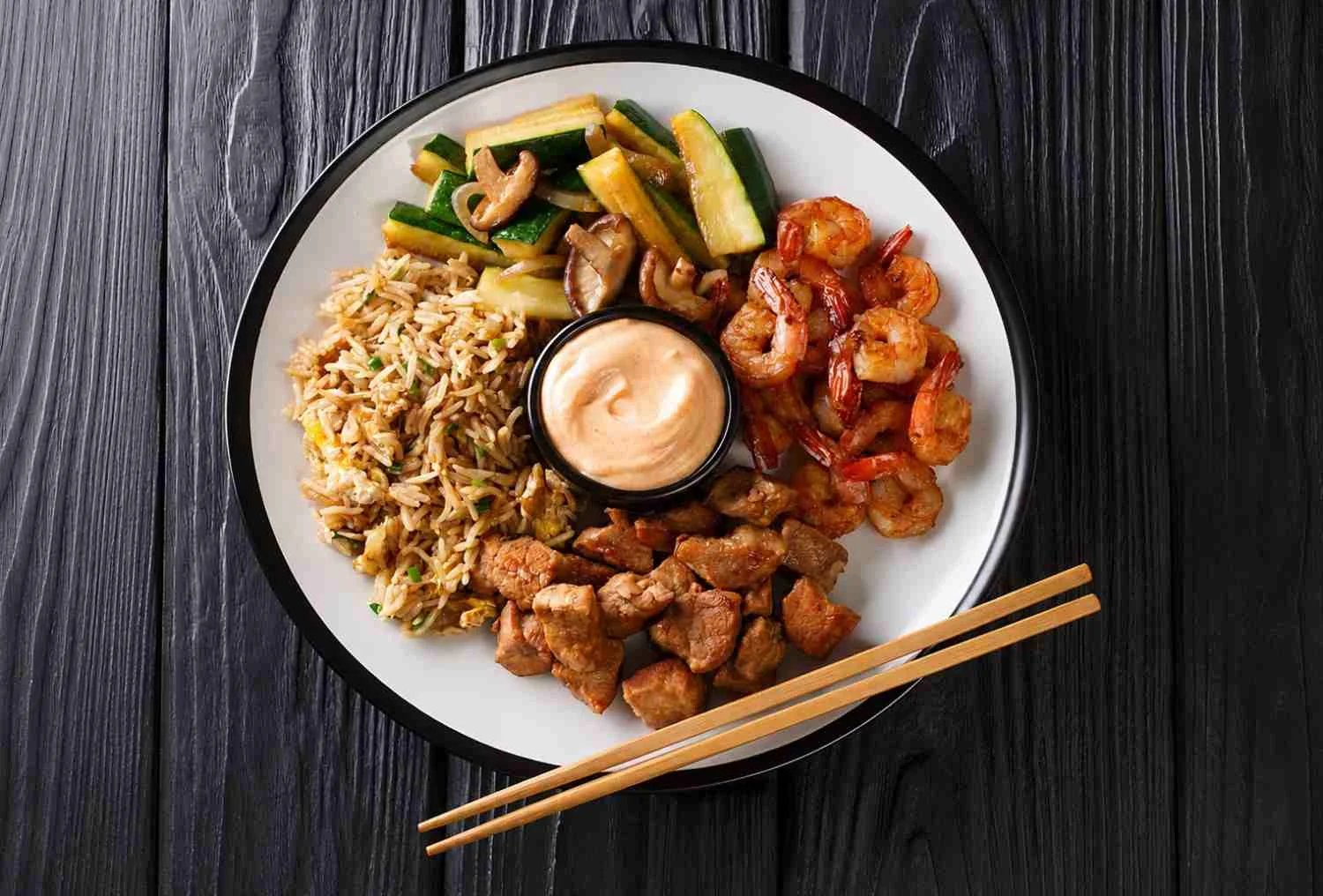
Before answering whether hibachi is healthy, it helps to look at each component separately, because they are not nutritionally equal.
The protein
This is the strongest part of the meal. Chicken, shrimp, salmon, and tofu are lean, high-protein choices that cook quickly on a flat-top grill with minimal added fat. The grilling method itself doesn't load calories onto the food the way frying does. A 6-ounce serving of hibachi chicken delivers roughly 280 calories and 34 grams of protein with about 2 grams of saturated fat. For a restaurant meal, that's a genuinely good nutritional profile. Steak and NY strips sit higher, around 350 to 450 calories for the same portion depending on the cut. Still reasonable, but leaner proteins give you more flexibility in the rest of the meal.
The vegetables
Also a strong point. Zucchini, mushrooms, onions, carrots, and broccoli come grilled fresh with minimal oil. They're low in calories, high in fiber and vitamins, and a meaningful portion of what ends up on a standard hibachi plate. Loading up on extra vegetables is consistently one of the best calls you can make at a hibachi restaurant.
The rice
This is where the calorie count starts climbing. Hibachi fried rice is made with butter, egg, and soy sauce, and a single serving runs between 250 and 400 calories depending on portion size and how liberally the chef uses butter. Switching to steamed rice cuts roughly 150 to 200 calories in one move. Skipping rice entirely and doubling the vegetables is even more effective.
The sauces
This is where most people quietly derail an otherwise solid meal. Yum yum sauce sits at around 100 calories per tablespoon, almost entirely from mayonnaise. Most people use two to three ounces at a restaurant without thinking about it, adding up to 200 to 300 extra calories from sauce alone. Teriyaki glaze layers sugar on top of sodium. Asking for sauce on the side is a simple, effective fix that doesn't require giving anything up permanently.
Worth Reading: Is hibachi a Japanese thing?
Hibachi Calories by Protein Choice
Here's a general breakdown of what a full hibachi dinner looks like nutritionally, based on a standard restaurant serving with fried rice and vegetables:
| Protein | Approx. Calories (full plate) |
|---|---|
| Hibachi shrimp | 500 to 650 |
| Hibachi chicken | 600 to 800 |
| Hibachi salmon | 650 to 800 |
| Hibachi steak / NY strip | 700 to 950 |
These numbers shift based on how much butter and soy sauce the chef uses and what sides you choose. Swapping fried rice for steamed rice alone brings every number down by 150 to 200 calories. Asking for sauce on the side cuts another 100 to 300 calories depending on how much you actually use.
To see which proteins are available at a private HibaChef event, the full menu breaks everything down by entree, from hibachi chicken and shrimp to NY strip and lobster tail.
The Two Things That Actually Make Hibachi Less Healthy
If you're eating hibachi regularly and wondering what to watch, the answer is almost always one of two things.
Sodium
A full hibachi meal can contain 1,500 milligrams of sodium or more, largely driven by the soy sauce used in both the protein marinade and the fried rice. For context, that's the entire daily sodium intake recommended for people monitoring their cardiovascular health. The soy sauce is the single biggest contributor. Requesting low-sodium soy sauce, or simply asking the chef to use less, is an adjustment most restaurants and private chefs will make without hesitation.
Calorie-dense sauces
Yum yum sauce is easy to underestimate. Three ounces, which is a fairly normal amount for someone who enjoys it, adds over 200 calories and more than 20 grams of fat to a plate that might otherwise be quite lean. That doesn't make it off-limits. It makes it worth asking for on the side so you decide how much goes on rather than having it applied by default.
Neither of these makes hibachi an unhealthy choice in any absolute sense. They're variables, and they're both easy to control.
Is Hibachi Healthy for Specific Diets?
- High protein diet: Without question, yes. Hibachi centers the meal around protein. A 6-ounce serving of chicken or shrimp delivers 30 to 40 grams of protein, and most restaurants will add extra protein for a fee if you want more.
- Low carb or keto: Yes, with one adjustment. Skip the rice and noodles. The protein and vegetable portions of a hibachi dinner are naturally low in carbohydrates. Grilled chicken or shrimp with butter, garlic, and grilled vegetables with sauce on the side fits a low-carb framework with minimal effort.
- Weight loss: Yes, when you order intentionally. Lean protein, grilled vegetables, and steamed rice is a balanced, filling combination that compares favorably to most restaurant options in terms of calorie density. The full plate with fried rice and generous yum yum sauce is a different meal in terms of numbers. The point is that hibachi is adaptable enough to work within a weight-loss approach without feeling like a compromise.
- Low sodium: This is the hardest one. Soy sauce is foundational to how hibachi food is seasoned, and it's difficult to avoid entirely in a restaurant setting. Requesting low-sodium soy sauce and sauces on the side helps, but sodium remains the most significant nutritional concern for hibachi dining. Private at-home hibachi events give you considerably more control here, which is covered in a section below.
How to Order a Healthier Hibachi Meal

These are practical adjustments that change the nutrition profile of your meal without changing the experience.
- Swap fried rice for steamed rice: This single change saves 150 to 200 calories and removes a meaningful amount of fat and sodium from the plate. Most restaurants offer this at no extra charge.
- Ask for sauce on the side: This applies to yum yum sauce, ginger sauce, teriyaki glaze, and soy sauce. Controlling your own portion is the simplest and most effective lever you have for managing both calories and sodium. You still get the flavor. You just decide how much.
- Request less butter and oil on the grill: Most hibachi chefs will reduce the amount of butter on the cooking surface without any pushback. You won't notice a dramatic difference in flavor, but the calorie and fat numbers on your plate will be meaningfully lower.
- Load up on the vegetables: Grilled zucchini, mushrooms, and onions are filling, low in calories, and genuinely flavorful when cooked with garlic and a small amount of butter. Asking for an extra portion of vegetables in place of more rice is a trade worth making if you're watching your intake.
- Use chopsticks instead of a spoon: This is a small but real trick. Eating with chopsticks naturally leaves more of the salty sauce behind on the plate rather than bringing every drop to your mouth the way a spoon does.
- Skip the fried rice entirely: Ask for a double vegetable portion instead. Some restaurants charge a small substitution fee. If you're keeping your calories tight, it's worth it.
The Home Hibachi Advantage
Here's the part that doesn't come up often in discussions about hibachi nutrition. The biggest variable in how healthy a hibachi meal is comes down to who controls the ingredients and how much of each one goes in.
At a restaurant, the chef follows a house recipe. The butter, the soy sauce, the oil: it all goes in at standard quantities because that's what produces the flavor guests expect. You can make requests, but you're working against kitchen defaults.
Hibachi at home reverses that dynamic. You're the host. You can request less butter on the grill, low-sodium soy sauce, extra vegetables in place of fried rice, or whatever adjustments fit your household's preferences. The chef cooks everything live in front of you, which means you can see exactly what goes into the food instead of estimating from a nutrition panel.
For families trying to eat well without sacrificing the experience, that level of ingredient control is a real advantage. Hibachi is already built around lean proteins and fresh vegetables. When you add full control over the add-ons, the case for private hibachi as a healthy special-occasion meal becomes genuinely strong.
Use the party estimator to get a quick number for your group, or book your event when you're ready. The process takes about two minutes.
Frequently Asked Questions
Is hibachi rice healthy?
Hibachi fried rice is calorie-dense because of the butter, egg, and soy sauce used to prepare it. A standard serving runs 250 to 400 calories with moderate to high sodium. Steamed rice is a lower-calorie alternative at around 200 calories per serving with no added fat. If you want to make hibachi rice at home where you control every ingredient, our step-by-step hibachi rice guide covers the full technique and where most home cooks go wrong.
Is hibachi chicken healthy?
Yes, it's one of the better protein choices in the lineup. A 6-ounce serving contains around 280 calories and 34 grams of protein with minimal saturated fat. The main thing to watch is the sodium from the marinade and soy sauce applied during cooking.
How much sodium is in a hibachi meal?
A full hibachi dinner can contain 1,500 milligrams of sodium or more, with soy sauce as the primary contributor. The general daily recommendation for most adults is under 2,300 milligrams, and under 1,500 milligrams for those managing blood pressure. Requesting low-sodium soy sauce and keeping other sauces on the side brings the total down significantly.
Is yum yum sauce bad for you?
It's calorie-dense rather than harmful. One ounce contains around 78 calories and 7 grams of fat, almost entirely from mayonnaise. Three ounces, which is typical at a restaurant, adds over 200 calories to your plate. Asking for it on the side is all it takes to stay in control of the portion.
Is hibachi good for weight loss?
It can be. A hibachi plate built around chicken or shrimp, grilled vegetables, and steamed rice is balanced, filling, and relatively low in calories for a sit-down restaurant meal. The key is in how you order. Fried rice and liberal sauce portions change the numbers quickly. The building blocks of the meal are solid; the customization is what makes or breaks it for weight loss.
How does hibachi compare to other popular restaurant options?
Favorably, in most cases. Hibachi's grilling method uses significantly less fat than frying, and the meal naturally includes lean protein and a substantial serving of vegetables. Compared to a fast food combo, a pasta-heavy Italian dinner, or an American steakhouse spread, hibachi generally delivers more protein and more vegetables at a comparable or lower calorie count. Sodium is the one area where hibachi is harder to manage than some other cuisines.
The Latest
Poolside Hibachi in Miami: The Ultimate Private Dining Experience
October 18, 2026
9 minutes read
How to Plan a Miami Beach House Hibachi Party
October 11, 2026
10 minutes read
How to Host an Outdoor Hibachi Party in Miami Without Going to a Restaurant
October 6, 2026
14 minutes read
How to Plan a Hibachi Pool Party in Orlando
October 5, 2026
14 minutes read
Best Hibachi Chicken Recipe: Restaurant-Style in 30 Minutes
September 23, 2026
11 minutes read
Related Blogs

Poolside Hibachi in Miami: The Ultimate Private Dining Experience
October 18, 2026