Is Hibachi Japanese? The Surprising Truth Behind Your Favorite Grill Show


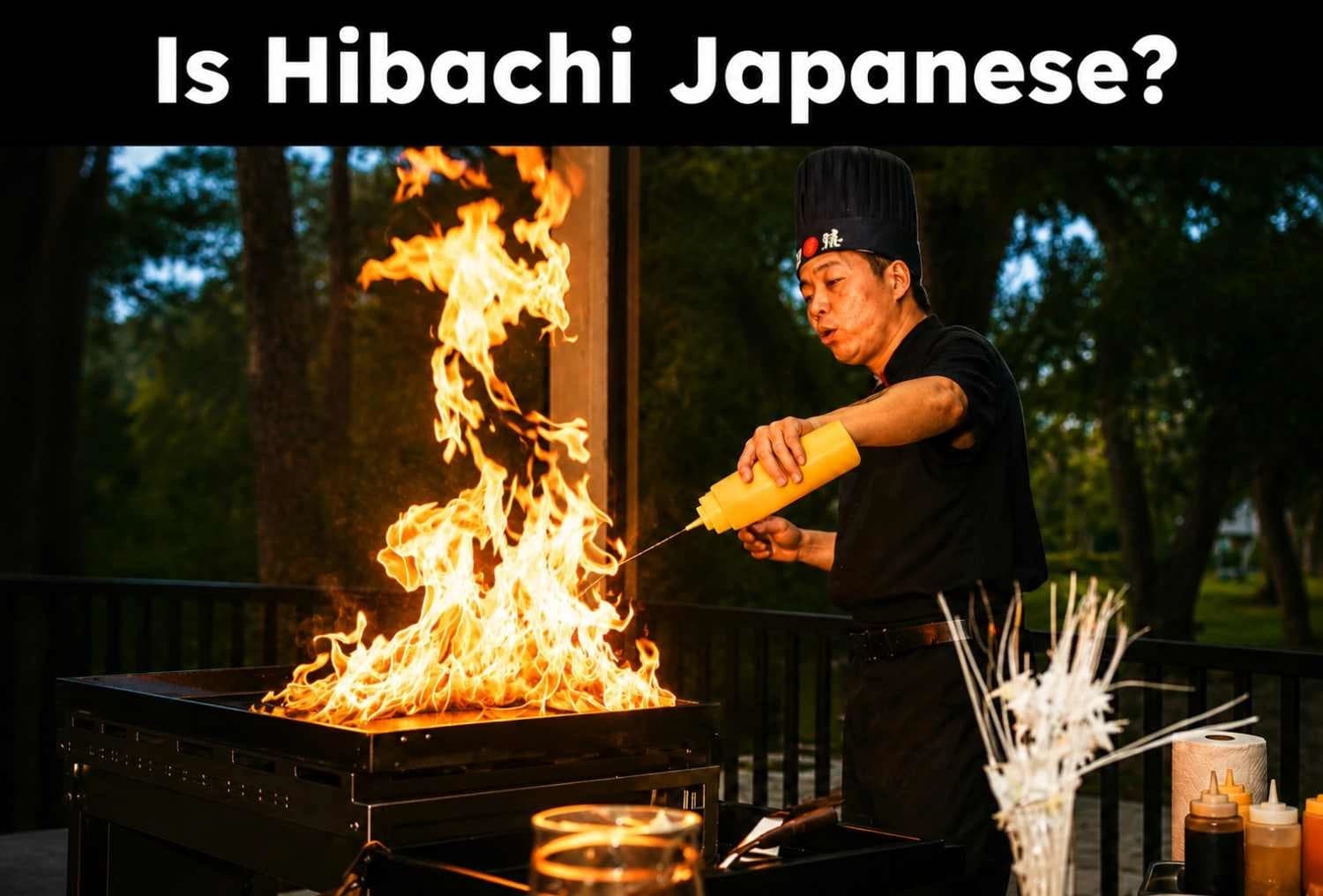
You have been there before. The chef walks up to the grill, taps two spatulas together with a sharp clang, and shoots a grin at your table. Flames erupt from an onion tower. A shrimp sails through the air and lands perfectly on someone's plate. The whole table cheers like they just watched a touchdown.
It is one of the most fun dining experiences in America. And almost everyone calls it hibachi.
But here is a question that almost never comes up between the fried rice and the yum yum sauce: Is hibachi actually Japanese?
The short answer is yes. The full answer is a lot more interesting. The word, the original device, and the cooking tradition behind your restaurant experience each have their own story. And the three of them only come together because of one very specific moment in history.
Let's get into all of it.
Is Hibachi Japanese? Here Is the Direct Answer
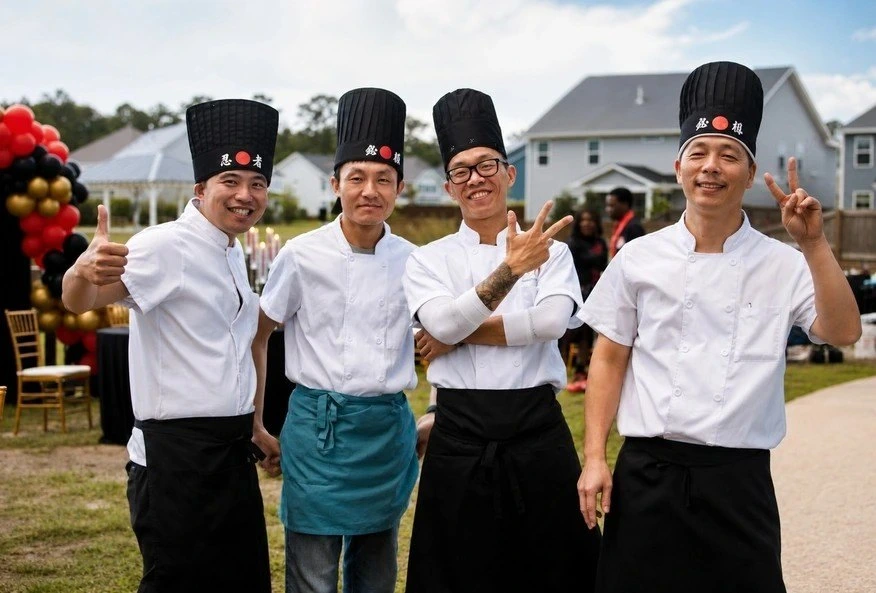
Yes, hibachi is Japanese. The word itself, the original device it describes, and the cooking tradition that inspired your restaurant experience all trace back to Japan.
That said, there are a couple of layers to this. What the word "hibachi" actually refers to in Japan is quite different from what American restaurants call hibachi. And the theatrical, flames-and-tricks show that America loves? That is the product of a very specific chain of events spanning over a thousand years and two continents.
Here is how it all fits together.
What the Word "Hibachi" Actually Means
Most people assume hibachi is the name of a dish or a cooking style. It is actually neither. The word predates the restaurant experience by over 1,200 years.
It Translates to "Fire Bowl"
Hibachi is made up of two Japanese words. "Hi" (火) means fire. "Bachi" (鉢) means bowl or pot. Combined, hibachi means fire bowl, which is exactly what the original object was.
The traditional hibachi was a round or cylindrical container, made from ceramic or wood lined with clay, designed to hold burning charcoal. Its job was to heat rooms and warm hands on cold days, not to cook food. Think of it as the Japanese equivalent of a space heater.
It dates back to Japan's Heian period, between 794 and 1185 AD, when it was common in homes, palaces, and tea rooms. Samurai families and the upper class prized them. Over the centuries, craftsmen turned them into elaborate decorative objects with hand-painted designs and lacquerwork, and they became status symbols long before anyone thought to cook over them.
As Japan moved through the Edo and Meiji periods, hibachi became more accessible to ordinary households. What began as an aristocratic luxury gradually spread into everyday domestic life across the country. Cooking on a hibachi only became common around the 1800s, when people started placing small amounts of food directly over the charcoal, and even then it was a side use rather than the device's primary purpose.
How "Hibachi" Got Confused in America
After World War II, Americans started importing small portable charcoal grills from Japan. The actual Japanese name for those grills was shichirin, not hibachi. But US retailers labeled them "hibachi," and the name settled into American consumer culture.
Later, when Japanese-style restaurants began opening in the United States, the same word got applied to the entirely different cooking experience inside them. It was already a familiar label, so it was easy to borrow.
The Oxford English Dictionary formalized this in March 2024, officially updating the North American definition of "hibachi" to include both portable charcoal grills and the flat iron griddles used in Japanese-style restaurants. The same word now officially describes two completely different objects depending on which side of the Pacific you are standing on.
The Cooking Style You Love Is Actually Called Teppanyaki
So if the traditional hibachi is a Japanese charcoal heating device, what exactly is happening at the grill table when you order dinner?
That cooking style has its own name: teppanyaki . And it is also Japanese.
Teppanyaki breaks down just as neatly. "Teppan" means iron plate. "Yaki" means grilled or pan-fried. So teppanyaki means cooking food on a flat iron plate, which is exactly what is happening when your steak, shrimp, and fried rice hit the griddle in front of you.
How Teppanyaki Differs from Traditional Hibachi
The two use completely different equipment and come from different points in history.
| Feature | Traditional Hibachi | Teppanyaki (American "Hibachi") |
|---|---|---|
| Cooking surface | Open charcoal grate | Large flat iron griddle |
| Heat source | Burning charcoal | Gas flame below the plate |
| Origin | Heian period Japan (794 AD) | Post-WWII Japan (1945) |
| Best for | Small items, charcoal flavor | Meats, fried rice, eggs, vegetables |
| Setting | Outdoors or home use | Restaurant tableside |
| Showmanship | None | Central to the experience |
The flat iron surface changes everything about the cooking experience. It distributes heat evenly across a large area, handles everything from a single egg to a full ribeye, and gives the chef a proper stage to work with. That versatility is exactly why the format caught on so quickly with audiences who had never seen anything like it before. And the story of those first audiences starts in postwar Japan, in 1945.
From a Restaurant in Kobe to a Street in Manhattan
To understand how teppanyaki crossed the Pacific and picked up the hibachi name along the way, you have to go back to where the restaurant experience actually began. The journey from Japan to American dining culture did not happen overnight. It took a World War, a chef in Kobe, and one very ambitious immigrant in New York City to pull it off.
The Restaurant That Invented Tableside Cooking (1945)
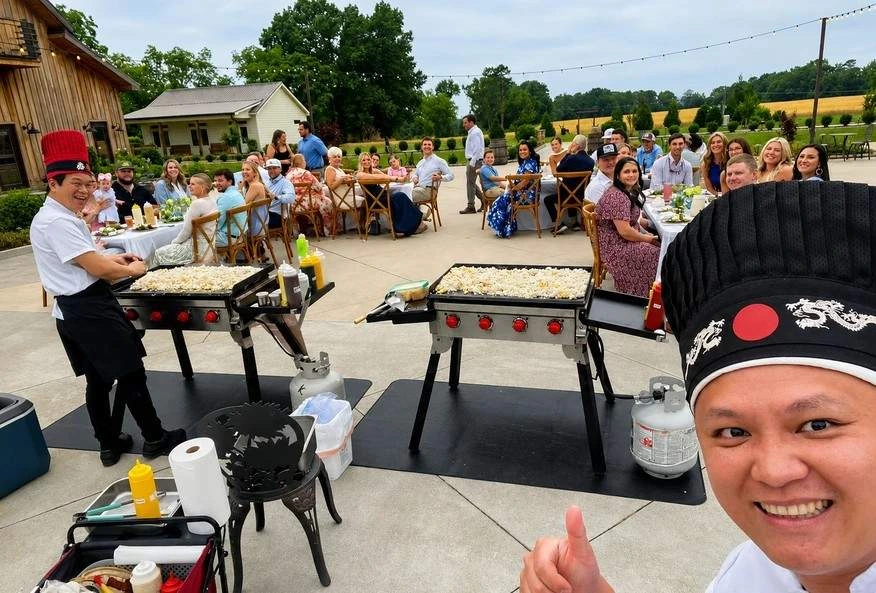
The teppanyaki restaurant as we know it was born in 1945, when a Japanese chain called Misono opened in Kobe. Misono is widely credited as the first restaurant to bring tableside teppanyaki cooking to a mainstream dining audience.
Chef Shigeji Fujioka of Misono developed the format: diners sat around a flat iron griddle and watched their food prepared live in front of them. He also introduced Western ingredients like steak, which was unconventional in Japanese cuisine at the time.
The cooking style turned out to be more popular with foreign visitors and American GI soldiers stationed in Japan after the war than with local diners. The Japanese public found the format a bit unusual. But foreign audiences were completely captivated by the combination of skill, heat, and spectacle in front of them. That fascination planted the exact seed that would take root in New York City less than twenty years later.
Rocky Aoki Brings It to New York (1964)
In 1964, Hiroaki "Rocky" Aoki, a Japanese immigrant and former Olympic wrestler, opened the first Benihana restaurant in Midtown Manhattan. He named it after his parents' Tokyo coffee shop, which was itself named for the safflower, called benihana in Japanese, found in the city after the firebombing of 1945.
The restaurant struggled in its first year. Then food critic Clementine Paddleford reviewed it for the New York Herald Tribune, and her write-up turned Benihana into a New York sensation almost overnight.
What Aoki understood was that Americans were not just looking for Japanese food. They wanted a show. He leaned into that instinct completely, refining the teppanyaki concept into full dinner theater. The onion volcano, the spinning egg, the shrimp toss, and precision knife work took center stage alongside the meal itself.
He branded the entire experience as "hibachi," a word Americans already associated with Japanese grilling from those postwar charcoal imports. The name landed perfectly with his audience. Every teppanyaki restaurant that opened after Benihana followed the same playbook, and within a generation the "hibachi restaurant" had become a permanent fixture of American dining culture.
What Is Genuinely Japanese and What America Invented
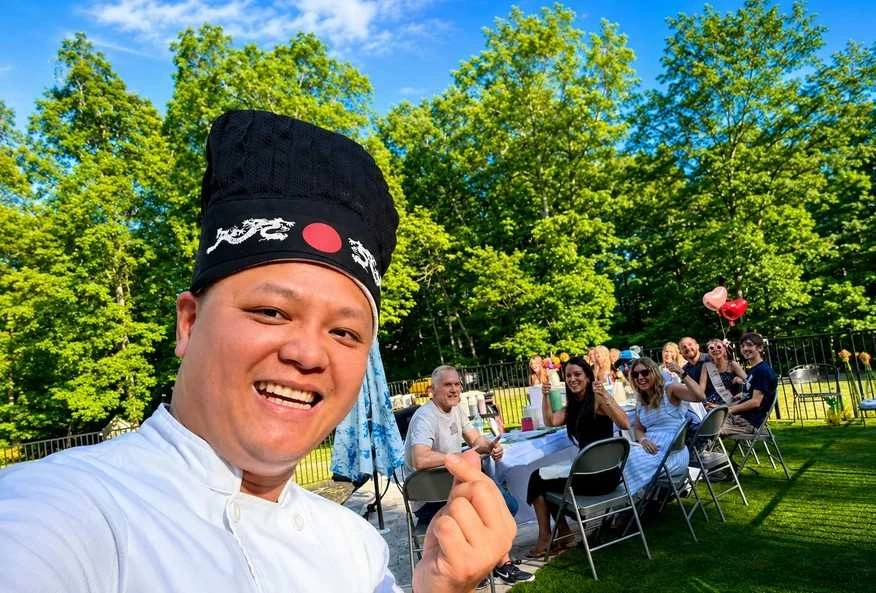
With the full history in hand, here is an honest look at what is actually in front of you when you sit down at a hibachi restaurant.
The Japanese Parts That Are Still There
The flat iron griddle technique is entirely Japanese in origin. The live tableside cooking concept traces directly back to Misono in 1945. The ginger sauce, soy-based marinades, and mirin used during cooking are authentically Japanese. The communal seating format, where a group shares a single grill and watches their meal come together in real time, also reflects a deeply rooted tradition of shared dining in Japanese culture.
The Layers America Built On Top
Yum yum sauce is American, full stop. Food author Nancy Singleton Hachisu, who has written three books on traditional Japanese cuisine, has confirmed it has no roots in Japanese cooking. It was created inside American teppanyaki restaurants, varies in recipe and name by region, and simply does not exist in Japan.
The theatrical performance elements are also American additions. The onion volcano, the shrimp toss, and the behind-the-back spatula flip were developed specifically to entertain Western audiences, not to honor Japanese culinary tradition. Larger portion sizes and the heavy focus on steak in American quantities reflect US dining expectations rather than Japanese practice.
What Rocky Aoki and the chefs who followed him built was not a watered-down version of Japanese cooking. It was something genuinely new: a format that took Japanese culinary technique, wrapped it in American showmanship, and created a dining category that now supports a multibillion-dollar industry. Both cultures contributed something real to what exists today, and that is worth appreciating every time the grill heats up.
Why Hibachi Has Never Been More Popular
According to multiple credible resources, the hibachi grill market was valued at $1.2 billion in 2024 and is projected to reach $2.4 billion by 2033, growing at a compound annual growth rate of 7.9%. As per IBISWorld's April 2025 data, the broader Japanese restaurant industry in the US brings in over $32 billion in annual revenue.
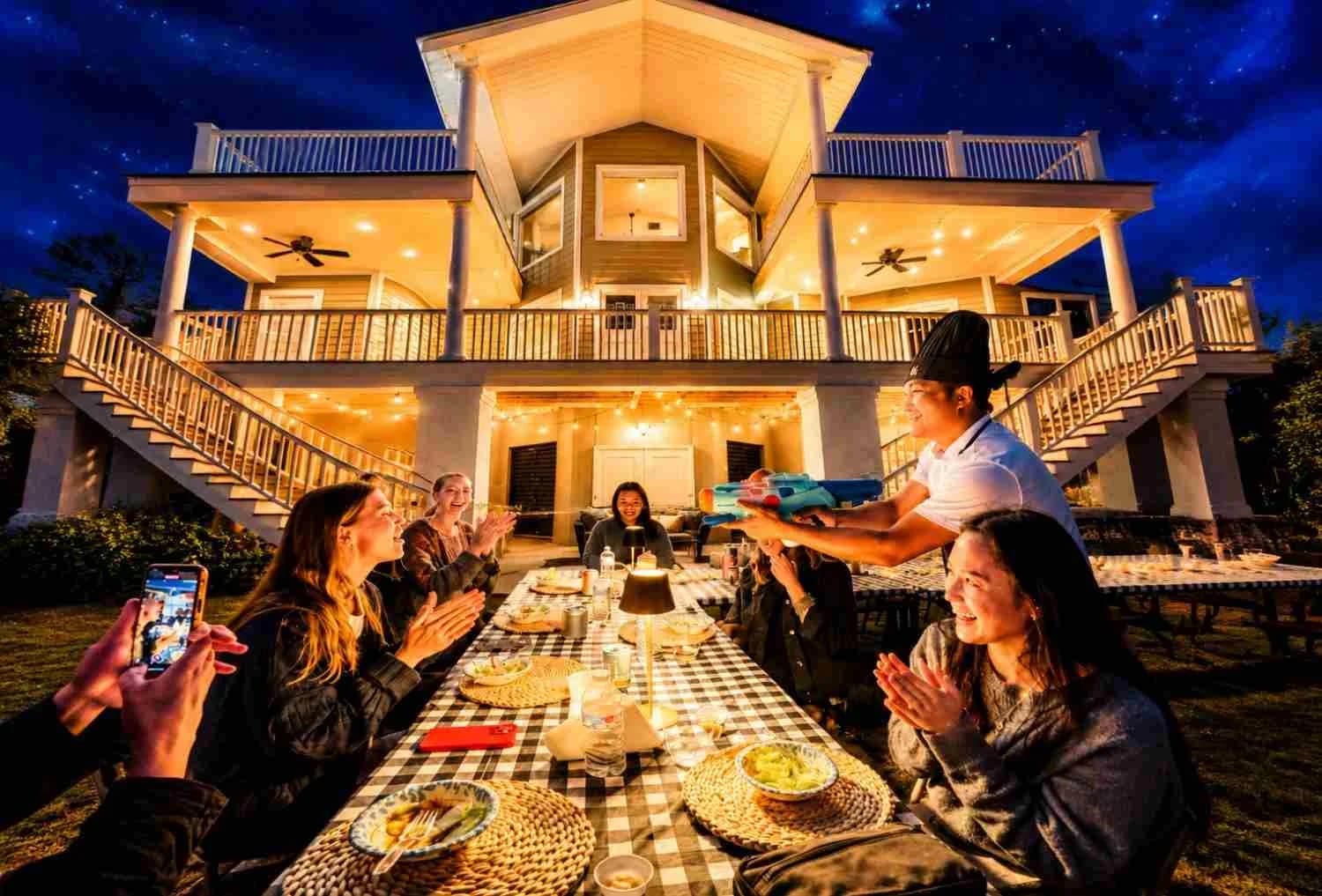
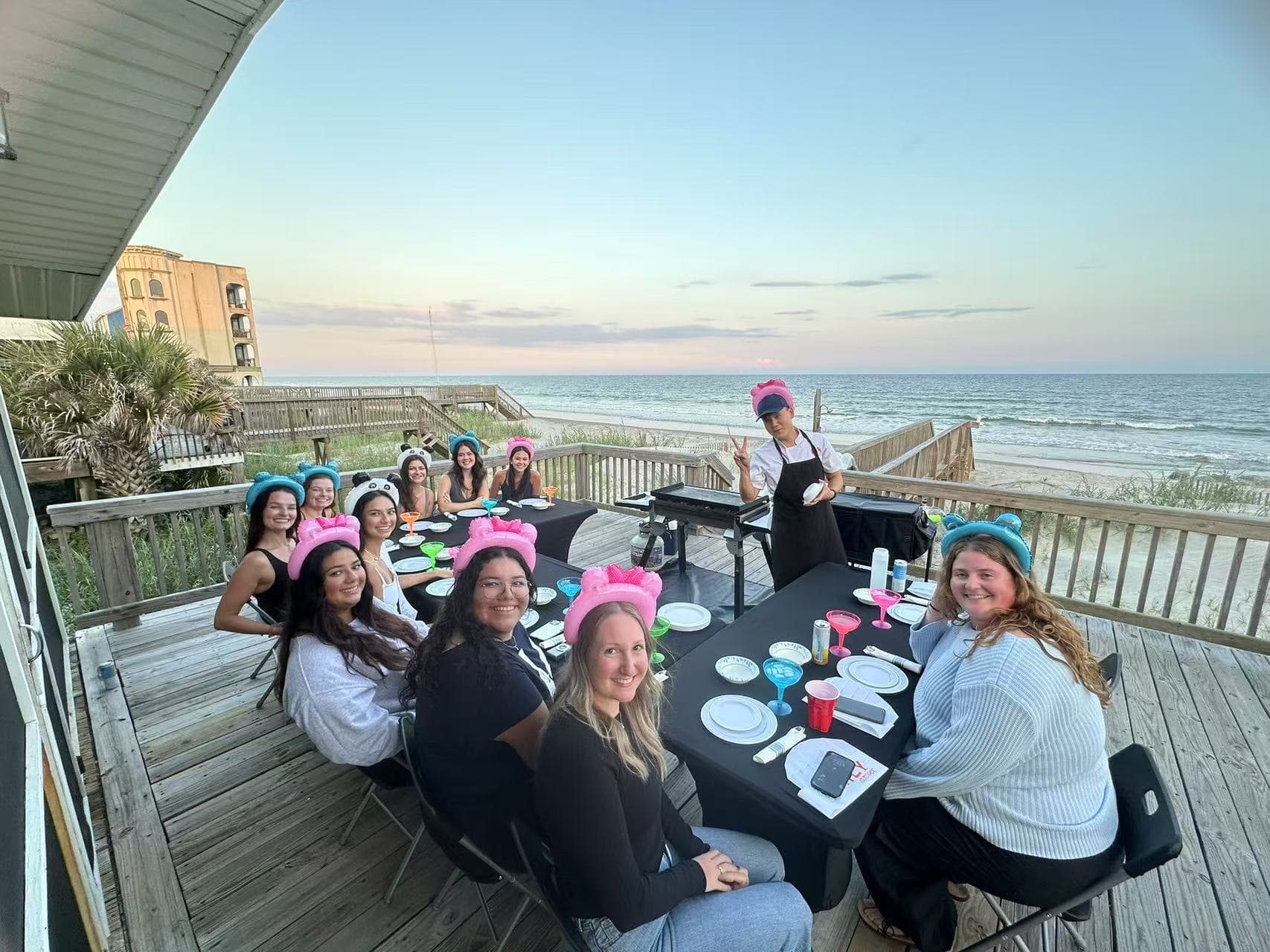
And the format is evolving. Private hibachi catering, where a trained chef arrives at your home or event venue with a full grill setup and performs the complete experience for your guests, is one of the fastest-growing segments in experiential dining today.
If you want to see what that looks like in practice, check out what HibaChef packages include and how private hibachi catering works. From backyard birthdays to corporate dinners and weddings, the full show travels with the chef.
Frequently Asked Questions
Is hibachi a thing in Japan?
Yes, but it looks nothing like what Americans know. The traditional hibachi fire bowl is still used in Japanese tea ceremonies and traditional homes. The restaurant experience Americans call hibachi does exist in Japan, but as teppanyaki: an upscale dining affair focused on premium ingredients like wagyu beef, not dinner theater. The onion volcano and shrimp toss are purely American inventions.
Why do Americans call it hibachi?
Because of Benihana. When Rocky Aoki opened his teppanyaki restaurant in New York City in 1964, he branded the whole experience as hibachi, a word already familiar to American consumers from portable Japanese charcoal grills sold in US stores after World War II. Every restaurant that followed copied the name, and it became permanently attached to the experience.
What is hibachi called in Japan?
In Japan, what Americans call hibachi at restaurants is called teppanyaki (鉄板焼き), meaning "grilled on an iron plate." The actual word hibachi (火鉢) refers to a traditional charcoal heating device, not a cooking style or restaurant category. If you walked into a Japanese restaurant and asked for hibachi, most locals would not know what you meant.
What do they squirt on rice at hibachi?
Mostly soy sauce and garlic butter. Soy sauce adds the salty, umami depth and creates the signature browning when rice hits the hot griddle. Garlic butter goes on toward the end, giving hibachi rice its richness and the flavor most people remember. Sesame oil and sake are also common additions, though the exact mix varies by restaurant and chef.
Are Lo Mein and hibachi the same?
No. Lo mein is a Chinese dish made with egg noodles stir-fried in a wok with a thick, savory sauce. Hibachi noodles are Japanese, traditionally made with yakisoba noodles cooked on a flat iron griddle and seasoned with soy sauce, garlic butter, and sesame oil. They look similar but come from different countries with different techniques and flavor profiles.
What seasoning is used in hibachi?
The core hibachi seasonings are soy sauce, garlic butter, sesame oil, ginger, mirin, and sake. Soy sauce provides the umami base. Garlic butter is the most distinctive element, giving hibachi its signature richness. Sesame oil adds depth, while mirin and ginger bring a subtle sweetness and warmth. Some restaurants finish chicken and shrimp with a squeeze of lemon juice.
So, The Answer Has Always Been Yes!
The next time that chef walks up and taps those spatulas together, you will know exactly where that moment comes from.
A word rooted in ancient Japan. A cooking technique born in postwar Kobe. A Japanese wrestler who saw what the world was ready for and built it into an American institution. And a cultural exchange that produced something neither country would have created on its own.
That is the real story behind your favorite grill show.
Ready to bring it to your own table? HibaChef brings a private hibachi chef directly to you, across 49 states. Real flames, real technique, and a dinner your guests will be talking about long after the grill cools down.
The Latest
Poolside Hibachi in Miami: The Ultimate Private Dining Experience
October 18, 2026
9 minutes read
How to Plan a Miami Beach House Hibachi Party
October 11, 2026
10 minutes read
How to Host an Outdoor Hibachi Party in Miami Without Going to a Restaurant
October 6, 2026
14 minutes read
How to Plan a Hibachi Pool Party in Orlando
October 5, 2026
14 minutes read
Best Hibachi Chicken Recipe: Restaurant-Style in 30 Minutes
September 23, 2026
11 minutes read
Related Blogs
Poolside Hibachi in Miami: The Ultimate Private Dining Experience
October 18, 2026